In Nepal only one goddess worshiped as the living goddess is Kumari. Kumari is recognized as the incarnation of Tuleju Bhawani. Since, Malla period the tradition of kumari was not only survive among three cites of Kathmandu Valley but also separate in another place such as Thimi, Banepa, Panauti, Dhulikhel, Bungamati, Nuwakot and so on. Although, being the Very First Royal Kumari of Nepal with history of 534 yr, Bhaktapur has been overshadowed by Kathmandu kumari in term of public attention.
The Cultural capital city of Nepal, Bhaktapur’s history goes back to 8th century and used to be capital of Nepal Mandala till the 12th to 15th century. It is known from several names in the world such as Open Museum, Nepal Cultural Gem, Living Heritage, Cultural Capital of Nepal, Center of Newar, City of Devotes, with historic significant of Art, Architecture and Woodcarving Manship. Similarly, the tradition of Royal Kumari was introduced by King Raya Malla a in Nepal Sambat 611 (1491AD) by establishing Chaturbarmha Maha Vihar and also started tradition of worshiping the Kumari.
After the death of King Yaksha Malla in 1482, the vast kingdom of Nepal Mandal was divided among his descendants. The eldest son Raya Malla received Bhaktapur, the second son Rana Malla got Banepa, and the youngest son Ratna Malla along with daughter Dharmavati inherited Kathmandu and Patan. Ratna Malla, being clever, secretly took the initiation meant for the crown prince and, together with his patron deity Taleju Bhawani, began ruling independently from Kathmandu. Saddened by this, King Raya Malla dreamt of Taleju Bhawani, who told him that she would be reborn as a daughter in the Shakya clan. Thus, in Nepal Sambat 611, he established the Chaturbramha Mahavihar and initiated the tradition of worshipping the Kumari. The first Buddhist priest of this Vihar was Jivachandra Bajracharya, son of the renowned tantric priest Gubhaju Surat Bajracharya. Hence, the Vihar is also called Surat Shree Chaturbramha Mahavihar. The royal Kumari of Nepal Mandal was first chosen from this Vihar.

As per the legend in 1641, King Pratap Malla of Kathmandu used to play dice with Taleju Bhawani. As he did so in secret, the queen suspected that he might be seeing another woman. When Taleju realized this misunderstanding, she disappeared. Later, when the king begged for forgiveness, she promised to be born in the Shakya clan, and thus the tradition of Kumari worship began in Kathmandu. Later in 1736, King Jaya Prakash Malla started the tradition of organizing the Kumari Jatra during Indra Jatra.
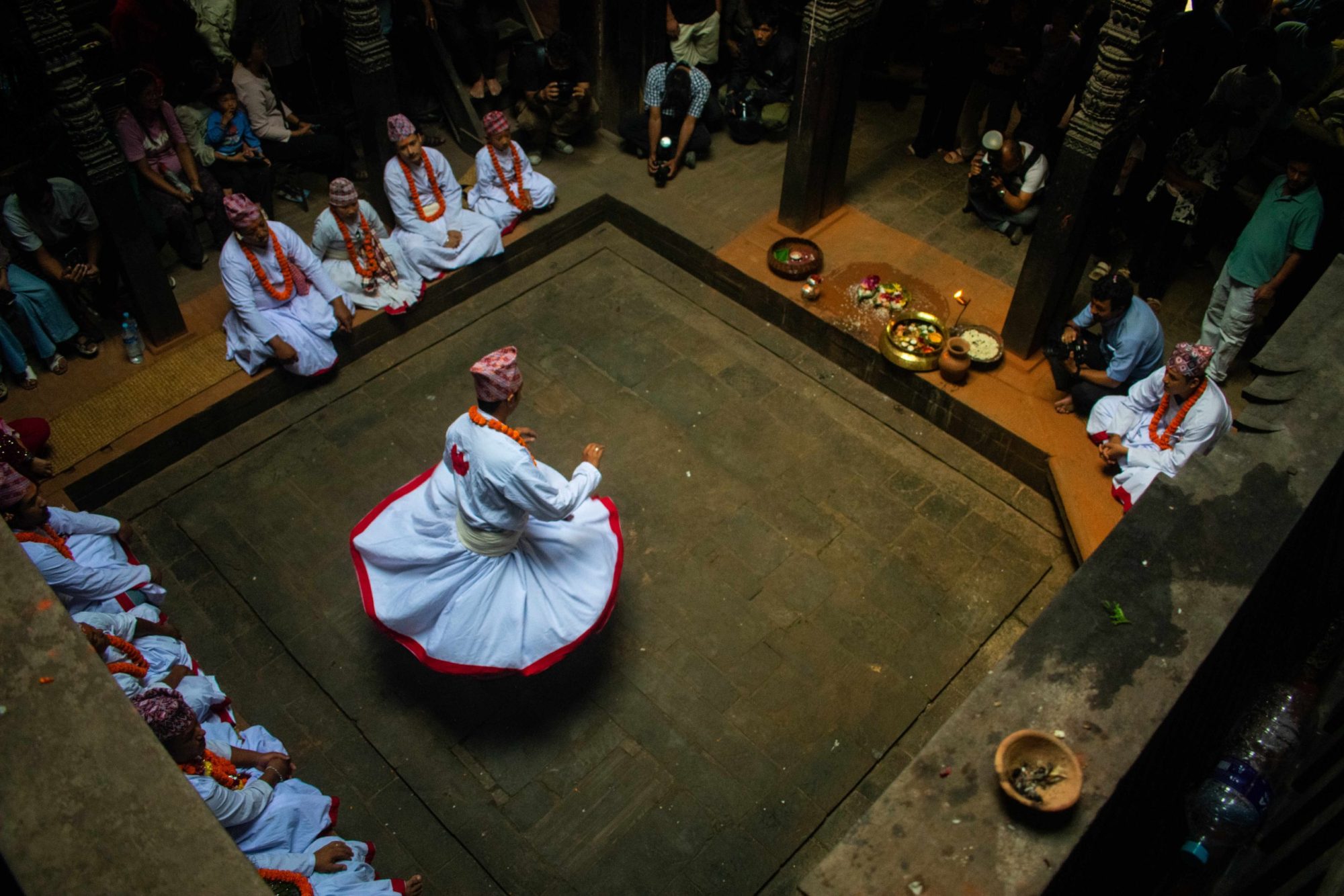
In Bhaktapur, also on the day of Navami in Dashain Kumari Jatra take place form Prasannashil Mahavihar to the Kumari house at Chasukhel where rituals and worship take place with 12 Kumari, where 9 represent Nawodurga including one Ganesh, one Bhairav and one main Kumari which is also known as Khwopa: Kumari Maju. A part from it, there are three more Kumaris they don’t participate during Jatra who were one is the Kumari form Waney Layeku, another form Hada Amganchen, and one is the Dudhe Kumari. But, Bhaktapur’s Kumari only reside in Kumari house of Prasannashil Mahavihar form Ghatasthapana to until full moon day of Dashain.
Hence, based on this history of Bhaktapur Kumari is 534 yr old, which means Bhaktapur Kumari is the very first Kumari. Even so, despite being very first this kumari hasn’t received much public attention. After all, the ruined house of kumari at Chasukhel will be reconstructed form this year after Dashain, which help to publicize history of the Kumari tradition began in Kathmandu Valley.