Narayan Man Bijukchhen “Rohit’’ is the profound communist leader as well as Chairman of Nepal Workers and Peasants Party of Nepal. A part from it he writes progressive literature on the behalf of people, about people’s rights, by the side social-cultural and political world history, geo-politics, geography, and so on through the name of Hari Bahadur Shrestha aiming to enlighten working class people politically and to make people patriot.
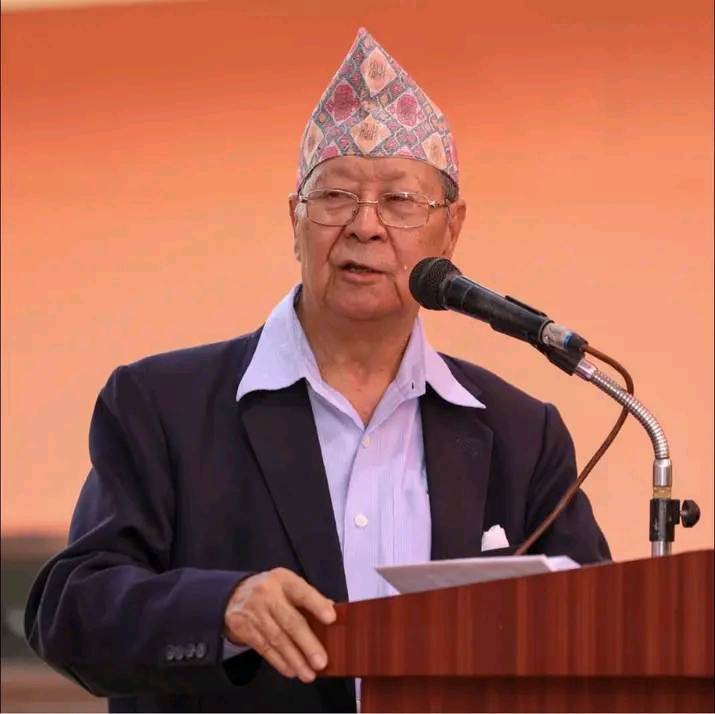
Although, gradually increasing discomfort towards politicians and political parties since decade, Rohit create different image in Nepalese politics than other politician based on ideology, ethics, thoughtful insights, patriotism, clean personality beyond power struggles along with deeply rooted feelings of serving country and people selflessly. He strongly believes “Selfless people are fearless” and politics to serve people and nation selflessly. And also admired a philosophy “Simple living, high thinking.”
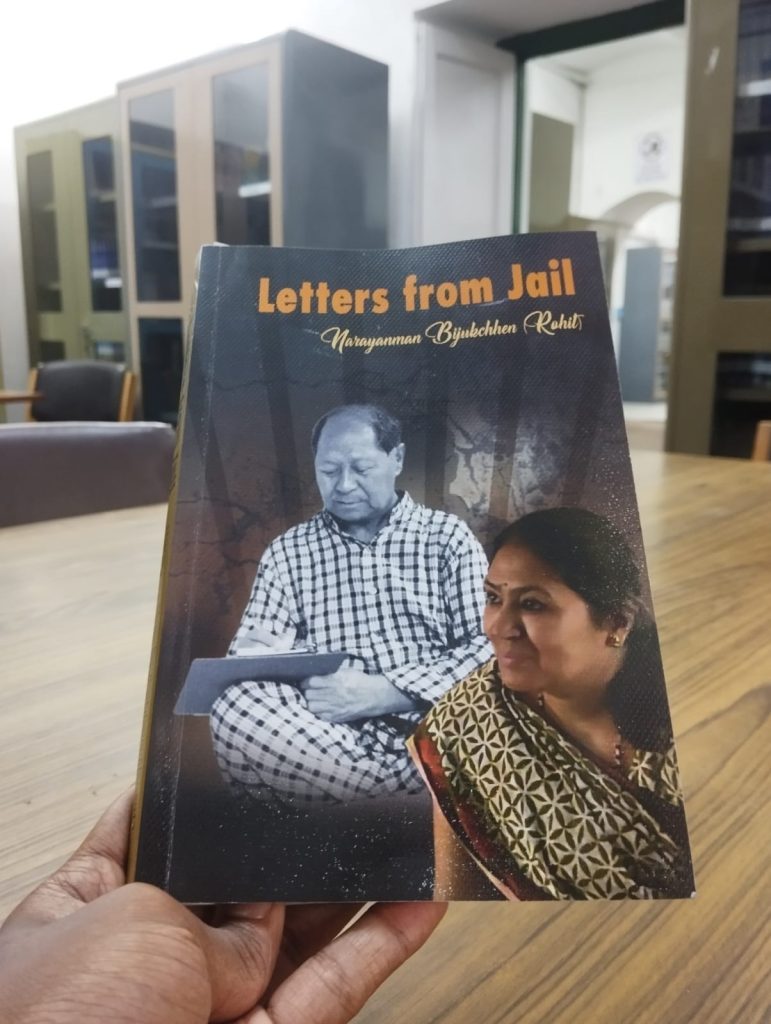
Probably, Rohit stands out as politician one who read and writes relatively more profoundly than other. “Letter From Jail” is the book presents thoughtful analysis, persuasive argument, deep reflection and possible consequence over several subject matter such as preservation of Nepalese art and culture, diverse society, national geography, contemporary national and international issue in 1988/89.
However, letter was written during state level conspiracy name as “Bhaktapur Scandal” in 1988/89 to spouse Late Comrade Shova Pradhan by himself to make her familiar with Bhaktapur, NWPP through cultural myths, ancient stories tell by senior citizens and finally to public in Aug/Sep 2012. Written decades ago, but it holds remarkable relevance today and demonstrating timeless vision of Rohit and intellectual depths.
First of all, form the alleys of Bhaktapur it is said that Saraswati travel on a swam were Laxmi travels on an owl. In Nepalese Society, Saraswati symbolized as the god of wisdom, knowledge, that helps one to difference right from wrong or good from bad things in the way that swan intake pure water form muddy. Symbolically it is said that swam intake pure milk even form muddy water. Hence, swan is a symbol of goddess Saraswati, Ride of God and goddess in Nepali religion/culture or like similes for instance (as brave as lion) in literature.
Next, “Laxmi” means symbol of richness that brings comfort, convenience or services and luxury. That may turn into one greedy, idle, arrogant and blind of judgement like blindness during day time of an owl. Therefore, Owl is a symbol of riches and form the streets of Bhaktapur it sounds Laxmi travel on an owl.
In present day “Laxmi travel on an owl” these saying has own relevance. While analyzing Gen-Z or Youth protest or movement against excessive corruption and social media band in Sep 8, 9 towards government and that lead political instability in Nepal.
One of the main root causes was excessive corruption, unaccountability, lack of transparency and frustration of youth people towards government. Likewise, blindness of owl during daytime major political parties of Nepal such as Congress, UML and Maoist where also as blind as an owl due to excessive corruption and their own power struggle where they didn’t even hear or address the common voice of youth and working-class people.
Hence, greediness of power and money or the poor mentality in politics i.e. power and money lead blindness as an owl blind during daytime eventually they wouldn’t judge anything what’s wrong or what’s right and as a result the then former Prime Minister K.P Sharma Oli resigned in Sep 9 and formed interim government.
There’s a question, the mentality of seeking foreign helps and funds even to preserve our own cultural heritage, how do we have right to pride over to that cultural heritage? Those monument’s, art, architecture, cultural heritage are directly linked with Nepalese identity which set image to foreign people who we are.
The Question has remarkable timeless relevance written decades ago. After the earthquake of 2015, Kathmandu Valley depends upon outsider help where Kathmandu’s hanuman Doka durbar was restored by the Chinese, Gaddi Baithak by the Americans even Patan’s Degu Taleju Temple was reconstructed with the financial support of Japan. Beyond it, Bhaktapur chose self-reliance over foreign aid because “Sovereignty is foremost” article which was published on 8 April 2025, (Tittle Bhaktapur 2.0 in Nepali Times) by declining 10-million-euro financial assist by German Government. Witnessing their aid banner around heritage site creates feeling of dependency and loss of ownership, makes people feel proud less even of their own heritage. Indeed, its sense their no right to pride ethically over that cultural heritage.
There’s also some thoughtful insight and analyzes over conservation and preservation of traditional dances, culture, authenticity, glory of Bhaktapur comparing Bengalis struggle for their identity due to increasing majority of non-Bengalis residents in Calcutta Metropolis during early 90s.
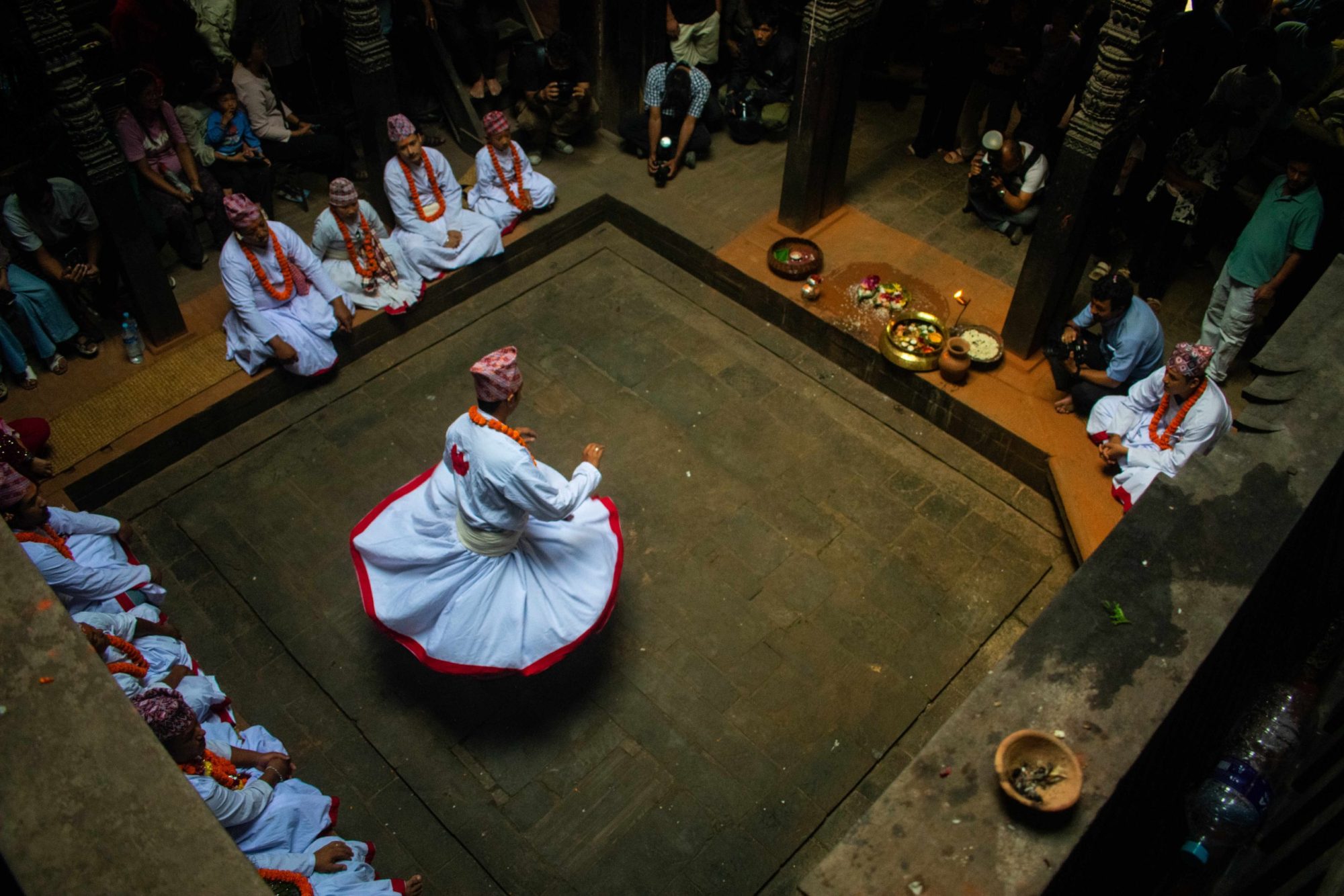
Today somehow those traditional dances are well preserved such as Ghintanggisi, Maka Pyakhan, Devi Pyakhan, Bhaila Pyakhan, Bhalu Pyakhan, Gainchaa Pyakhan, and so on along timely update by commercializing it systematically via competition on the occasion of Sa:Paru (Gai Jatra Festival) by municipal. Although, some of the dances where not exist today as before.
Rohit believes self-identity and harmonious diversity is life in sense. Art and culture of each race and country, express their history and geography. In Newari community there are different seasonal flowers such as Lanthaku Swon (Aster Flowers), Ghunakera Swon that makes culture livelier and more colorful. For instance, aroma of Dhanchaswan (Artemisia Pallens or Davana) and Mooswan (Origanum Marjoram) in Newari culture makes environment festive across people, but these floras are being endangered against increasing unplanned urbanization, migrations, loss of arable land in Kathmandu valley. Nevertheless, preservation thought over these intangible heritage relevancies even today.
Nepal is the country of natural and cultural diversity. Bijukchhen believe nature image is reflected in Mans heart. In another word man’s impression are seen in nature. He also persuades impression Nepal’s of natural diversity is imprinted in heart of each race of Nepalese people and are expressed as happiness and sadness through songs. Imprinted things form nature would can evoke both joy and sorrow, one of the communities of terai region “Maithili” they are born in songs and die in songs, ladies argue through songs, cry through songs and celebrate wedding, festivals and other rituals through songs.
So that he views nature and human emotion as deeply intertwined. From Bijukchhen’s perspective, human feelings and nature continuously influence one another; nature acts as a mirror reflecting human emotions. A calm river symbolizes peace, while a stormy sky represents anger or sadness.
He also suggests that preserving nature is essential not only for ecological balance but also for personal and social well-being. Since human emotions are closely tied to natural surroundings, the loss of nature can lead to emotional emptiness and social disconnection. A peaceful environment nurtures inner calmness, creativity, and empathy, while the destruction of nature disturbs both mental and cultural harmony. Therefore, protecting rivers, forests, and mountains is not just an environmental duty but also a way of preserving human sensitivity, culture, and identity.
In today’s fast-changing world, where urbanization and technology often separate people from nature, Bijukchhen’s perspective reminds us to maintain this bond. Even in the midst of modernization and technological change, people still turn to nature for emotional balance and inspiration.
Engaging with nature through art, music, and sustainable living helps restore emotional health and strengthen communities. Thus, the preservation of nature becomes a foundation for both personal peace and collective cultural well-being.
Indeed, Rohit depth contemplation over Nepal art, culture and nature have highly timeless relevance for its preservation and conservation, it also embraces one to prioritize human sensitivity, self-identity, patriotic feeling, personal peace and collective well-being. The question regarding mentality of seeking international fund and helps to build own cultural heritage has own space at all. Form the alleys of Bhaktapur saying like Saraswati travel on a swam where Laxmi travels on an owl become today’s reality as history teach.
The intellectual depth, thoughtful visionary insights, timeless vision in multi-dimensional aspect of people and country along with politics based on ideology, ethics, patriotism, clean personality, a strong believer of serving people and nation selflessly beyond power struggle and so on qualities of leader become more relevant in current visionary leadership crisis of Nepal. Its great opportunities to analyzes people center politics with different angle by new younger generation through book like “Letter from Jail.
