Bhaktapur’s ancient legends never fail to amaze. The city holds countless stories and myths passed down through generations. The deeper you dive into them, the more you want to learn. Knowing about Bhaktapur is attractive, but studying its traditions is truly mind-blowing.
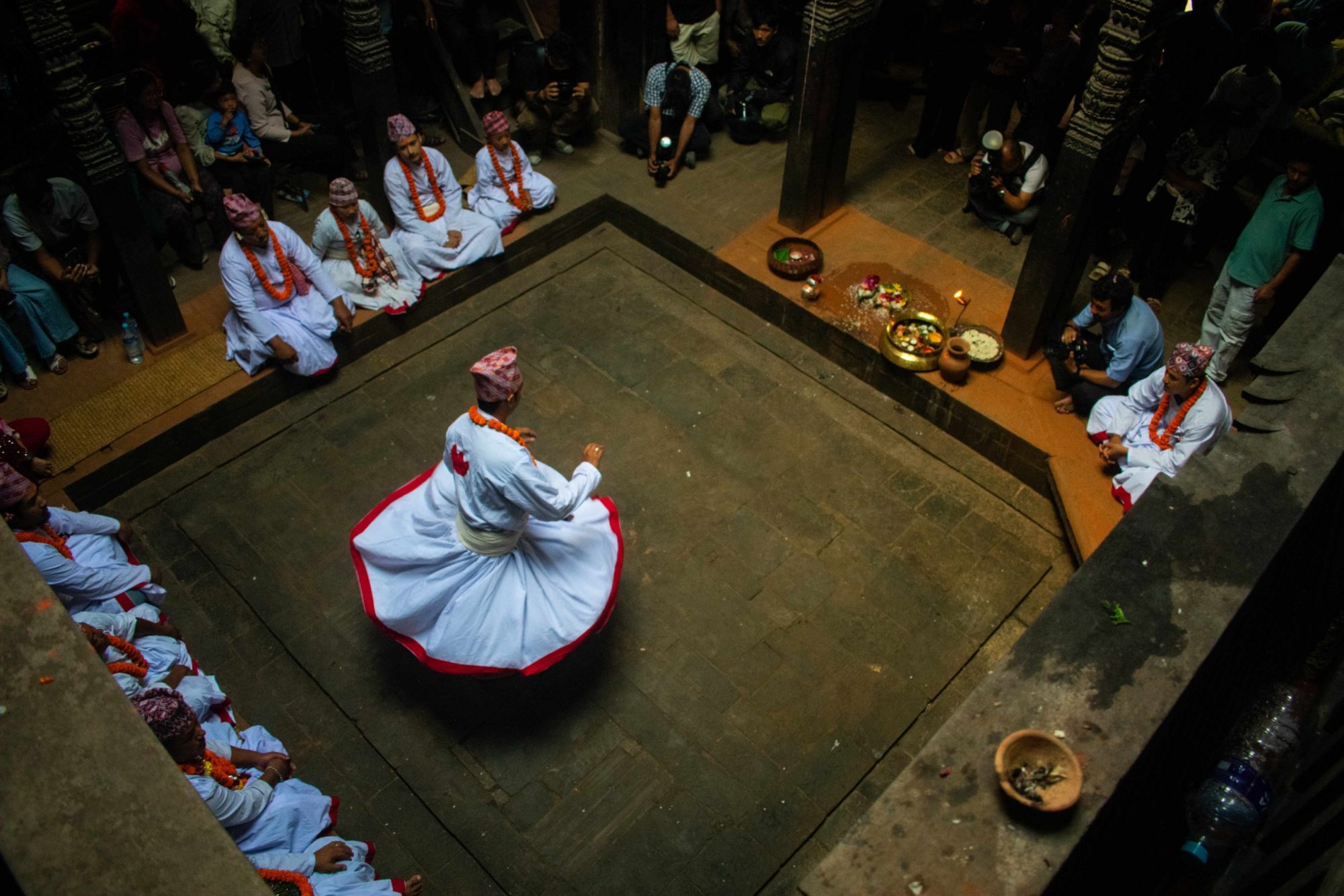
What makes Bhaktapur special is that its people don’t just tell these stories; they live them out every day through dances, rituals, and festivals (jatras). It must be hard to keep these dramatic traditions alive for so long, but the people of Bhaktapur are lucky to still experience the same Navadurga stories they heard when they were children.
Bhagasti: Blessing the Rice Fields
The Navadurga Dance is the best example of a living legend on the streets of Bhaktapur. Many have heard of it, but few truly understand it. Every year, the sacred masks “die” during the festival of Bhagasti. This tradition is kept alive by the Navadurga Gana—the group of dancers who perform behind the masks of the gods and goddesses.
Following tradition, the old masks are burned at the end of the festival. Their ashes are then released into the Hanumante River. People believe the Navadurga blesses the water, which flows into the fields just as the rice-planting season officially begins.
Between Sithinakha and Bhagasti
Once the rice fields are blessed, farmers get incredibly busy with planting. During this intense farming period, locals stop singing religious songs (bhajans) and put away their musical instruments. But right before they stop, they offer a final prayer to the Navadurga.
They present a special offering (puja) that includes a small portion of Samayabaji, Chatamari, and Sachung. Sachung is a unique treat made from fried grain flour, and it tastes delicious. Because of this special dish, locals lovingly call the deities Sanchungcha dyo and the Navadurga temple Sanchungcha dekye.
Almost every resident of Bhaktapur visits the Navadurga temple at least once a year during the busy window between the Sithinakha and Bhagasti festivals.
Sibaja: The Music of Death
Sibaja is famously known as “the music of death.” Most locals recognize it as the sound of a butcher’s drum, and it is heard only twice a year. Bhagasti is one of those rare occasions.
Members of the Nay community—who work as both butchers and traditional musicians—play this music. They use a double-headed drum called a Khiñ, striking it with a stick in one hand and using a flat palm on the other. For them, Bhagasti is a ritual of urban renewal and rebirth.
They join the Navadurga parade as it moves toward the Brahmayani temple. There, the divine masks are cremated to the haunting rhythm of the Sibaja.
The Masks of the Deities
Every year, a master mask-maker crafts a brand-new set of masks for the Navadurga and their companion deities. He finishes making them four weeks before the Dashain festival.
The Navadurga group includes Brahmayeni, Maheswori, Kumari, Indrayani, Tripura Sundari, Barahi, Mahakali, Mahalaxmi, and Vaishnavi. The accompanying deities are Ganesha, Duma, Sima, Balkumari, Mahadev, and Sweta Bhairva. All of these masks are carefully crafted in the neighborhood of Yachhen Tole.
For more than 200 years, this mask-making ritual has kept Bhaktapur at the very heart of the divine goddess dance cycle.